During a recent inspection of a small office building, we came across a condition that perfectly illustrates why regular commercial property inspections are so important, especially for tenant-occupied buildings.
At first glance, the issue may seem minor. The water heater was functioning, tenants had not reported any problems, and there was no obvious water on the floor. But a closer look at the expansion tank connection tells a very different story.
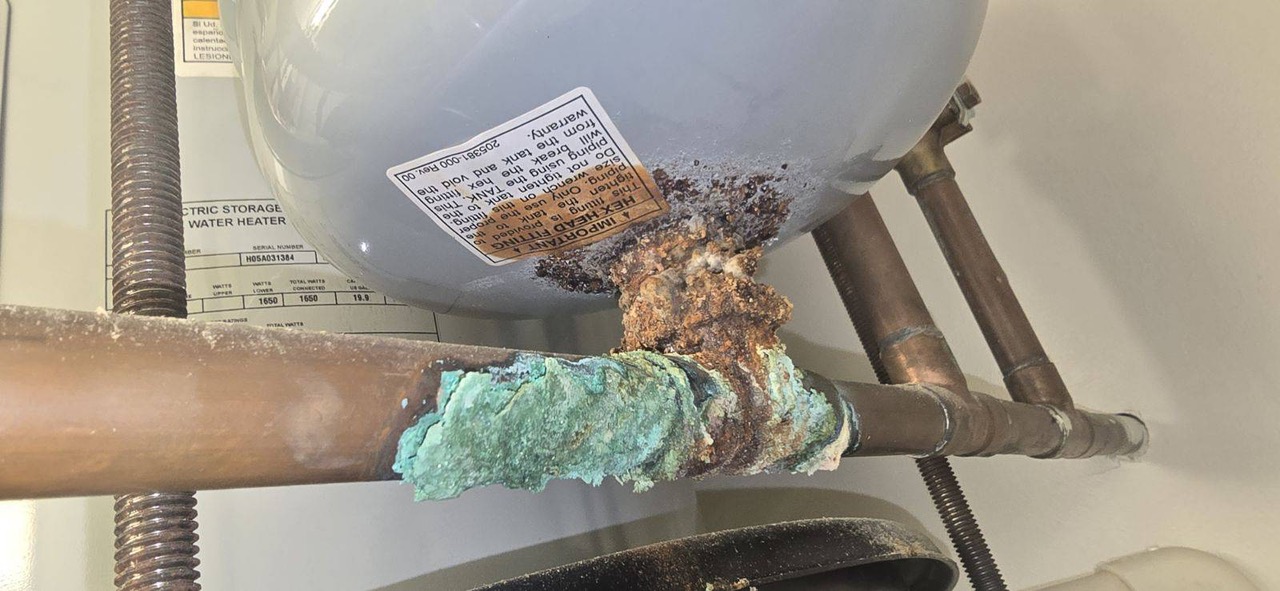
The expansion tank attached to the hot water heater showed significant corrosion and mineral buildup at the threaded connection. Green and blue residue was visible on the copper piping, along with rust-colored corrosion at the steel fitting. This type of buildup doesn’t happen overnight. It’s a sign of a slow, ongoing leak that has likely been present for months, possibly longer.
Expansion tanks are designed to absorb pressure created as water heats and expands. They’re a critical safety component, but a problem with the tank is easy to miss because they tend to sit quietly above or beside the water heater. In tenant-occupied buildings, these spaces are rarely accessed by owners, and tenants often have no reason to inspect mechanical components. As a result, small leaks can go unnoticed for long periods of time.
In this case, the leak occurred at the connection between dissimilar metals. Over time, moisture and pressure cycling contributed to corrosion, gradually weakening the fitting.
Why this matters to building owners
For owners of tenant-occupied properties, this is exactly the type of issue that can create unexpected disruption and expense.
If left unaddressed, conditions like this can lead to:
- Sudden failure of the fitting
- Pressurized water release and flooding
- Damage to finished spaces or adjacent suites
- Emergency repairs during business hours
- Tenant complaints or business interruption
What starts as a relatively inexpensive plumbing repair can quickly turn into a much larger problem. In addition, an insurance adjuster may consider known corrosion that is not addressed as deferred maintenance, which can impact damage claims. Even in a NNN lease where tenants are responsible for maintenance, landlords should engage in proactive oversight to prevent expensive repairs later and maintain investment value.
The Need to Be Proactive
Routine commercial inspections are designed to catch issues like this before they become emergencies.
When identified early:
- Repairs can be scheduled proactively
- Costs are typically lower
- Tenants are minimally impacted
- The risk of water damage is significantly reduced
This expansion tank issue is a good example of a condition that may not affect daily operations until the day it suddenly does.
Building owners often focus on roofs, HVAC systems, and major capital items. But many of the most costly failures we see start with small components that quietly deteriorate over time.
Regular inspections provide a second set of trained eyes on your building, helping you:
- Identify early warning signs
- Plan repairs instead of reacting to emergencies
- Protect both your assets and your tenants
This expansion tank connection didn’t fail suddenly. It showed clear signs of distress long before it reached a critical point. Without regular inspections, those warning signs are easy to miss. especially in tenant-occupied buildings where owners aren’t regularly in mechanical rooms.
Routine inspections aren’t just about finding problems. They’re about reducing risk, controlling costs, and protecting long-term property value.
This plumbing example illustrates why routine commercial property inspections matter. In this case, the building owner promptly replaced the expansion tank and repaired the issue at a cost of $600. Had the problem not been identified when it was, it would have been only a matter of time before a leak occurred and significant water damage resulted. Our inspection saved the unit owner thousands of dollars and likely many hours of stress.
An inexpensive component like an expansion tank fitting can quietly deteriorate over time. Without regular inspections, these issues often go unnoticed until they result in leaks, water damage, or emergency repairs, all of which are far more costly than early intervention. Contact us today to schedule your first annual inspection!!