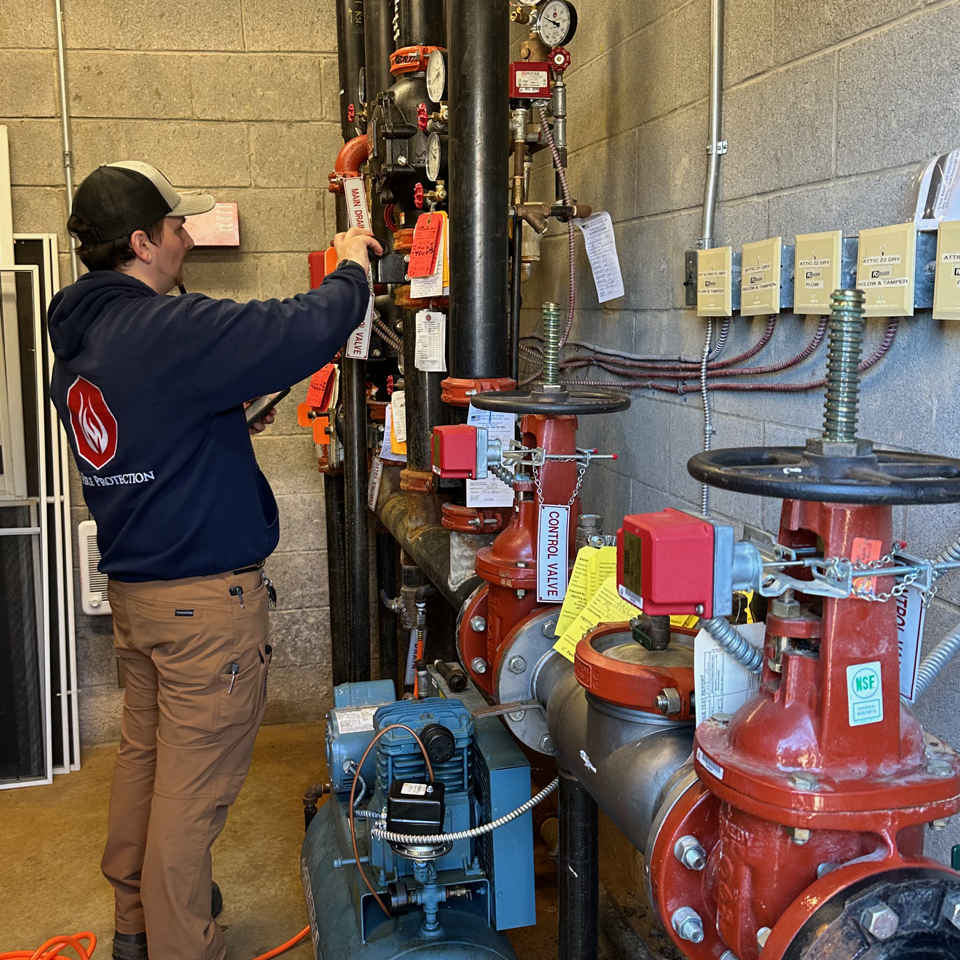
Fire and life safety systems are one of the most critical components of any commercial building. As part of our standard commercial property inspection service, and based on the CCPIA International Standards of Practice, our inspectors conduct a visual observation of the building’s fire and life safety systems. This includes:
- Site access & identification: Verification of fire lane access, overhead clearance, visible building address, and unobstructed fire hydrants.
- Fire protection systems: Presence and general condition of fire alarms, sprinkler systems (including painted heads), smoke/CO detectors, and accessible alarm panels.
- Fire extinguishers & suppression readiness: Confirmation that extinguishers are present, visible, and not obstructed.
- Means of egress: Evaluation of exit quantity, placement, travel distance, and door functionality (including proper swing direction).
- Exit pathways & signage: Inspection of exit signs, emergency lighting (with backup power), directional signage, and clear, hazard-free egress paths.
- Fire separation & containment: Identification of compromised fire-rated assemblies, including wall/ceiling penetrations and non-functioning fire doors.
- Hazardous conditions & storage: Review of combustible material storage, required signage, safe clearances from ignition sources, and obstructions to critical life safety equipment or exit routes.
Over the past year, as we’ve inspected a wide range of building types. We’ve seen many leaking valves, blocked or stuck fire doors, rusty and damaged hydrants, fire extinguishers hidden behind merchandise or equipment, and improper, unsafe storage of combustible materials. These are important safety concerns that we’re seeing frequently, an indication that regular inspections are not being conducted. We strongly encourage all building owners to schedule an annual property maintenance inspection that includes a visual inspection of the fire and safety systems.
In addition to the type of visual inspections that our company provides, Prince William County, and most jurisdictions, require that the fire and life safety systems be inspected, tested, and maintained in accordance with the Virginia Statewide Fire Prevention Code (SFPC) and applicable NFPA standards. While most property owners generally understand the importance of fire alarms and sprinklers, they are often not fully aware of the ongoing inspection and documentation requirements, and how quickly gaps in compliance can become safety risks or code violations. It’s critical for building owners to have a contract with a reliable and responsive Fire & Safety Inspection company.
Required Fire & Safety Inspections
Commercial buildings are expected to maintain a range of fire and life safety systems, each with its own inspection schedule and requirements.
Fire Alarm Systems
Fire alarm systems must be inspected and tested at least annually, with many systems requiring semi-annual or quarterly checks depending on their configuration. These inspections verify that detection devices, pull stations, notification systems, and monitoring connections are functioning properly.
Fire Sprinkler Systems
Sprinkler systems follow a more layered inspection schedule. In addition to annual inspections, components such as control valves and water flow alarms are often checked quarterly, and internal pipe inspections are required every five years.
Fire Extinguishers
Extinguishers must be visually inspected monthly and serviced annually by a licensed professional. Proper placement, accessibility, and up-to-date service tags are essential.
Emergency Lighting and Exit Systems
Exit signs and emergency lighting must remain operational at all times. These systems are typically tested monthly and annually to ensure they function during power loss conditions.
Means of Egress
Exit pathways must remain clear, accessible, and properly marked. Unlike other systems, this is not a periodic requirement, it is an ongoing condition that must be maintained daily.
Documentation
Inspection reports, service records, and deficiency logs must be maintained on-site and made available upon request. Even if systems are functioning properly, the absence of documentation can still result in compliance issues.
When Systems Fail: Immediate Action Required
If a fire protection system becomes impaired, whether due to malfunction, maintenance, or damage, there are strict requirements that must be followed. In many cases, the Fire Marshal must be notified, and if systems are down for an extended period, a fire watch may be required until repairs are completed.
This is not an area where delays or shortcuts are acceptable. These systems exist to protect lives, and when they are not operational, the level of risk increases significantly.
Where a Property Inspection Adds Value
At Bright Leaf Commercial Property Inspections, we frequently observe fire and life safety systems as part of our broader building evaluations.
While we do not replace the inspections that must be performed by licensed fire protection contractors, we provide an independent perspective by identifying:
- Visible deficiencies
- Missing or outdated inspection tags
- Gaps in documentation
- Conditions that may warrant further evaluation
Ensuring these systems are properly inspected, documented, and maintained, and that the right professionals are involved, is not just about meeting code requirements. It is about protecting people, preserving property, and operating responsibly.
Frequently Asked Questions
- How often should fire sprinkler systems be inspected?
Fire sprinkler systems follow NFPA 25, which requires multiple inspection intervals:
- Monthly and quarterly checks (valves, gauges, alarms)
- Annual full system inspection
- Internal pipe inspections every 5 years
These layered inspections are critical to ensure the system will function properly in an emergency.
- What happens if fire protection systems are not inspected or maintained?
Failure to properly inspect and maintain systems can result in:
- Code violations and potential fines
- Increased liability for property owners
- Higher risk of system failure during a fire
More importantly, these systems are designed to protect lives. When they are not maintained, the risk to occupants increases significantly.
- What are the most common fire safety issues found in commercial buildings?
Based on industry trends and field observations, common issues include:
- Expired or missing inspection tags
- Incomplete documentation
- Blocked or inaccessible exits
- Inoperable alarm devices or emergency lighting
- Sprinkler heads that are damaged, painted, or obstructed
- What is the difference between a commercial property inspection and a licensed fire system inspection?
A commercial property inspection (like those performed under CCPIA standards) is primarily a visual assessment. Inspectors typically:
- Verify the presence of fire protection systems
- Identify visible deficiencies
- Note conditions like painted sprinkler heads or obstructed components
However, detailed testing, certification, and repairs must be performed by qualified fire protection contractors.
This distinction helps property owners understand why both services are necessary.